
Car-Part.com Used Auto Parts
Car-Part.comAuto & Vehicles
4.4287.00 Reviews
- Version
- 2.16.9
- Installs
- 500.00K
- Age Rating
- Everyone
Screenshots

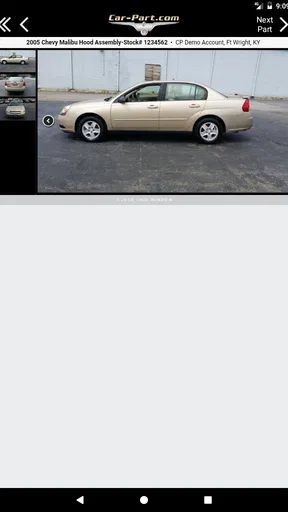
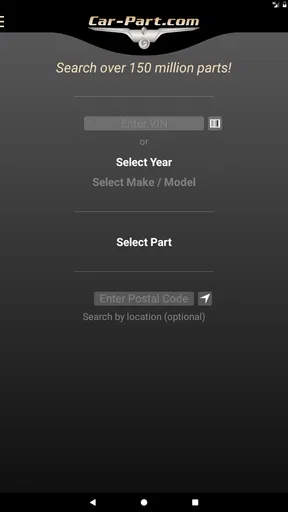
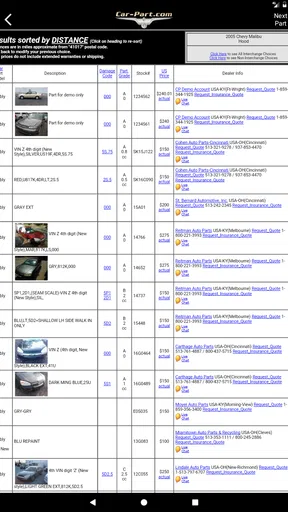
Our Review of Car-Part.com Used Auto Parts
 Analysis by Appyee
Finding a used replacement part is usually less about spotting a familiar product name and more about asking the right question in the right place. Car-Part.com Used Auto Parts takes that problem to a large online marketplace built around recycled vehicle components. I found it most useful when I already knew what part I needed and wanted to search across many dismantlers instead of contacting yards one by one.
This is a free Auto & Vehicles app from Car-Part.com, and its main appeal is practical rather than flashy: it helps turn a vague repair task into a searchable request. The marketplace covers more than 100 million parts, so the experience is shaped by breadth. That breadth can save time, but it also means I have to pay attention to compatibility, condition, seller details, and communication rather than treating the first result as an automatic match.
The app has a 4.4 average from around 1.1 thousand ratings, with more than 500 thousand installs. Those figures suggest that it has found a steady audience among people who repair vehicles, compare replacement costs, or simply want an alternative to buying a new component. I would recommend it to a careful shopper who is comfortable checking vehicle details. I would be more cautious about recommending it to someone who expects a polished retail checkout experience with every decision made for them.
How the marketplace feels when the connection matters
I find a marketplace most useful when I can keep the search moving without losing track of the repair itself. This section looks at how connection quality, preparation, and a few deliberate checks affect the trip from identifying a part to following up on a promising result. A little structure can make a broad search feel manageable, even when I need to pause and resume along the way.
Search works best when I begin with a precise repair need
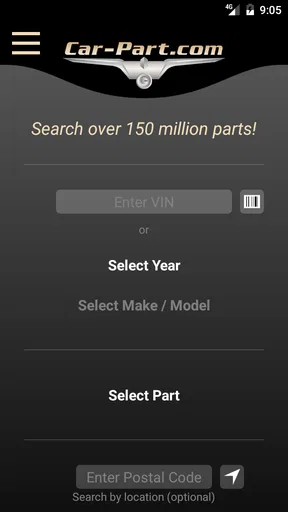
The first important lesson is that this is not an app I open casually to browse car parts. It becomes useful when I can describe the vehicle and the component with reasonable precision. A request such as “I need a headlight” is much less helpful than identifying the vehicle and distinguishing the exact side or assembly involved. The more specific my starting point, the less time I spend sorting through results that look similar but are not interchangeable.
That matters because recycled parts often come from different vehicles, trims, production variations, and equipment packages. Even when two components appear identical in a photo, their connectors, mounting points, sensors, or included hardware may differ. The app can help me discover candidates, but I still treat compatibility as my responsibility. The strongest workflow is search first, verify second, contact the seller third.
Connectivity is central during this process. Search results need to load, listings need to be reviewed, and seller information needs to be reached while the app is communicating with its marketplace. In a strong signal area, that feels natural: I enter the request, examine available options, and narrow the list. In a weak signal area, the same task can become stop-and-start, especially if I am standing beside a vehicle in a driveway, parking lot, or repair yard.
I would not plan a repair around the assumption that every useful detail will be available without a live connection. Instead, I save or note the vehicle identification details and the names of promising parts before moving somewhere with unreliable service. That small preparation makes the app more useful in real mobile situations, because the difficult part of the search is often remembering exactly what I found after the screen stops loading.
A realistic driveway scenario
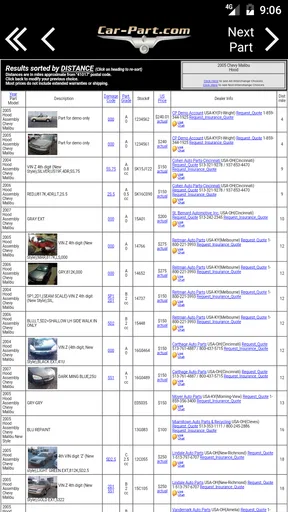
Imagine a rear light has failed on an older car, and a new replacement is too expensive for the owner’s budget. I would use the app at home while the vehicle is nearby, identify the car carefully, and search for the relevant assembly. After reviewing several listings, I would compare condition and seller information rather than choosing the cheapest result immediately. I would then write down the listing details or take a screenshot for reference before calling or messaging the seller through the available contact route.
That workflow is more realistic than assuming the app completes the whole purchase instantly. The marketplace helps with discovery and comparison, while the final confirmation may require a conversation. I would ask whether the part is still available, whether it includes bulbs or mounting pieces, and whether the seller has checked its condition. Those questions are especially important for body and electrical components, where a photograph may not reveal everything I need to know.
The network-dependent nature of the experience is not automatically a weakness. A large marketplace needs communication between the app and current listings. The trade-off is that I get access to a wider pool of possibilities, but I should use it when I can give the search enough attention and maintain a stable connection. It is less suitable for a rushed, one-handed search while I am already halfway through a repair.
Using it away from a desk
The mobile format makes sense for the situations in which used parts are actually needed. I might be beside a damaged vehicle, in a garage, or speaking with a mechanic who wants me to check availability quickly. Having the marketplace on a phone means I can search without returning to a computer, and I can compare options while looking directly at the vehicle.
Still, mobile convenience does not remove the need for careful reading. Small screens encourage quick taps, and that is risky when several listings have similar names. I slow down before contacting anyone and check the vehicle description, part wording, condition information, and any notes attached to the listing. If a result is unclear, I treat that uncertainty as a reason to ask a question, not as permission to guess.
One useful habit is to separate the search into two stages. At the vehicle, I record the exact problem and identifying information. Later, when I have a stable connection and a few uninterrupted minutes, I compare listings in detail. This avoids making a purchase decision in a noisy environment where I may misread a description or forget which side of the vehicle I am working on.
The app is also a better fit for people who already understand basic vehicle terminology. A professional technician can move quickly through component names, while a first-time owner may need to confirm whether the needed item is a complete assembly, a small internal piece, or a related part with a similar name. I would advise beginners to use the app alongside a mechanic’s description or the vehicle’s repair documentation rather than relying on visual similarity alone.
What happens when the connection or the search goes wrong
Any marketplace search can fail in ordinary ways: the connection may be weak, a result may not match the actual vehicle, or a part may no longer be available when I try to follow up. The important point is to have a recovery plan. If results do not load, I wait until the connection improves instead of repeatedly submitting the same request. If a listing seems wrong, I return to the vehicle details and rebuild the search rather than forcing a near match.
When a promising part disappears or the seller cannot confirm it, the app’s broad marketplace is more valuable than a single-store search. I can try a different wording, check related listings, or widen the search only when I understand what compatibility compromise I am making. Widening too early creates noise; widening carefully can reveal a useful alternative.
I also avoid treating a seller response as a technical guarantee. A seller may know the donor vehicle and the condition of the component, but I still want to confirm fitment with the vehicle information I have. For electronics, sensors, and assemblies with multiple variants, that extra check is worth the time. A cheap part that cannot be installed is not a saving.
When I lose track of a result, I repeat the search using the same vehicle and part description instead of relying on memory. I keep notes about the seller, the condition, and the questions I still need answered. This is a simple but important recovery technique because marketplace searches can produce several similar options, and mobile browsing makes it easy to confuse one listing with another.
Managing data and attention on a phone
Because the app depends on online marketplace activity, I use it deliberately when mobile data matters. I avoid refreshing the same result repeatedly, especially in a poor-signal area where each attempt may take time without adding anything. I first make the search terms as complete as possible, then review the returned options in one session.
Preparing the vehicle details before opening the search also helps reduce wasted browsing. I keep the model information, part name, and side or position ready so that I am not experimenting with several vague searches. This is not only more data-conscious; it produces cleaner results and makes comparison easier.
Photos and detailed listings deserve attention, but I do not scroll endlessly just because the marketplace is large. I set a practical stopping point: once I have a few plausible options, I compare their condition and seller information, then contact the most suitable candidates. The cheapest listing is not necessarily the best value if it requires extra hardware, has unclear condition, or creates more uncertainty about fit.
Another useful approach is to use the app for research before making a decision elsewhere. I can learn whether a recycled part is realistically available and use that information when discussing the repair with a mechanic. This makes the marketplace valuable even when I do not complete the transaction through the phone. It gives me a clearer sense of the options without forcing me to buy immediately.
Where it beats familiar alternatives, and where it does not
Compared with searching a general web marketplace, this app is more focused on recycled automotive components. That focus is its main advantage. I am not sorting through unrelated products, and the search is aimed at the kind of inventory that independent dismantlers and salvage businesses may have available.
Compared with calling local yards one at a time, the marketplace can save effort by exposing more possibilities in one place. The trade-off is that I may need to perform more verification myself. A local mechanic or parts counter may already know the exact catalog number and can recommend a direct replacement, while this app gives me a broader set of candidates that still need checking.
Compared with buying new from a traditional retailer, recycled parts can be appealing when the vehicle is older or the repair budget is limited. However, a new part may be the better choice for safety-critical components, wear items, or anything where predictable condition matters more than price. I would use the app confidently for suitable replacement searches, but I would not let the availability of a used component override a mechanic’s advice about reliability or safety.
The app is also not the right choice for someone who wants a completely guided shopping journey. It does not replace knowledge about the car, and the marketplace model means that listing quality and communication can vary. Its strength is reach, not removing every decision from the buyer.
Practical questions I would answer before installing
If I were deciding whether it is worth installing, I would first ask whether I regularly deal with vehicle repairs or parts research. For a single emergency where I do not know the part name or vehicle details, a mechanic may be faster. For repeated repairs, an older car, or a hard-to-find component, the marketplace becomes much more compelling because the search can reach beyond one nearby supplier.
I would also ask whether the app costs anything to start using. It is free, which removes the main barrier to trying it while I compare repair options. Free access does not mean every listed part will be the right price or condition, so I still compare the total practical value rather than assuming the app itself guarantees a bargain.
Device compatibility is another straightforward consideration. The current version is 2.16.9, and the app requires Android 6.0 or later. That makes it accessible on many older Android phones, although I would still keep the operating system updated where possible for a smoother and safer general mobile experience.
Parents and shared-device users may also want to know about age suitability. The app is rated for Everyone, which fits its straightforward automotive purpose. Even so, younger users should not be encouraged to make technical or financial decisions about vehicle parts without an adult or qualified mechanic checking the choice.
Finally, I would ask whether the app is useful if I am not ready to buy. In my experience, yes: it can serve as a research tool. I can investigate the likely availability of a component, compare the kinds of listings that appear, and prepare better questions for a repair shop. That makes it more flexible than a simple checkout app, provided I am willing to do the verification work.
My connectivity verdict
Car-Part.com Used Auto Parts is most convincing when I treat it as a connected research and marketplace tool rather than a magic parts identifier. Its large inventory can make difficult searches more productive, especially for older vehicles or components that are expensive to buy new. The mobile format is useful at the exact moment I am looking at a vehicle and need to investigate options.
Its limitations are closely tied to that strength. The experience depends on reaching current marketplace information, and a wide selection can create more decisions instead of fewer. I need a stable connection, accurate vehicle details, patience with listing differences, and a willingness to confirm compatibility before committing.
Developed by Car-Part.com and available free for everyone, it is a sensible app for budget-conscious owners, DIY repairers, mechanics, and anyone comparing recycled parts. I would skip it if I wanted guaranteed new components, instant expert diagnosis, or a fully managed purchase with no seller conversation. For the right user, though, the app’s real value is the combination of mobile access and marketplace breadth: it helps me find possibilities, while careful judgment turns those possibilities into a sensible repair.
Verdict
Strengths of Car-Part.com Used Auto Parts
- Large inventory of used parts from salvage yards across the U.S.
- Useful search by vehicle, part category, location, and interchange details.
- Lets you compare prices and availability from multiple sellers.
- Direct contact with dismantlers can help confirm fitment before buying.
- Good option for finding discontinued or hard-to-source replacement parts.
Limitations of Car-Part.com Used Auto Parts
- Search results may include outdated listings or parts that are already sold.
- Part quality and warranty coverage vary significantly between sellers.
- Shipping costs can be high for bulky or heavy automotive components.
- The app may redirect you to seller websites to complete some purchases.
- Vehicle compatibility still requires careful verification before ordering.
Similar Picks in This Category
View All
Android Auto
Google LLC4.1

maxim — order a taxi & food
PT. SITO4.7

Штрафы ГИБДД: проверка с фото
Pays LLC – Штрафы ГИБДД4.7

Номерограм – проверка авто
Авто Ассист4.8

Дром Авто
Дром4.9

Frequently Asked Questions
What is Car-Part.com Used Auto Parts?
Car-Part.com Used Auto Parts is a search tool for finding recycled and used vehicle components from salvage yards and auto recyclers across the United States and Canada. After entering your vehicle details and the part you need, the service displays matching inventory, seller information, prices, and contact options. It is especially useful when you want to compare used parts instead of buying new replacements.
How do I search for a compatible used auto part?
To search effectively, select or enter your vehicle’s year, make, and model, then choose the specific component you need. Depending on the part, you may also be able to provide details such as engine size, body style, transmission, or side of the vehicle. Review the listing carefully because compatibility can vary, and confirm the part number or fitment with the seller before purchasing.
Can I buy parts directly through Car-Part.com?
Car-Part.com primarily works as a marketplace and search platform connecting shoppers with auto recyclers; the exact purchasing process depends on the individual seller. Some listings may provide pricing and online inquiry options, while others require you to call or message the yard. Before completing a transaction, ask about payment methods, shipping, pickup, return policies, warranties, and any additional fees.
Are the used parts listed on Car-Part.com reliable?
The condition and reliability of a part depend on the vehicle it came from and the auto recycler offering it. Listings may identify parts as tested, inspected, rebuilt, or sold with a warranty, but these descriptions are not necessarily identical between sellers. Read the condition notes, photographs, mileage information, and warranty terms, and contact the seller if important details are missing.
Is Car-Part.com Used Auto Parts free to use, and is it available on mobile devices?
Searching the Car-Part.com inventory is generally free for shoppers, although the part itself, shipping, taxes, and possible service charges are determined by the seller. The service can be accessed through a mobile-friendly website and may also be available through an official mobile application, depending on your region and device. Always download from a legitimate store or the official Car-Part.com source.
